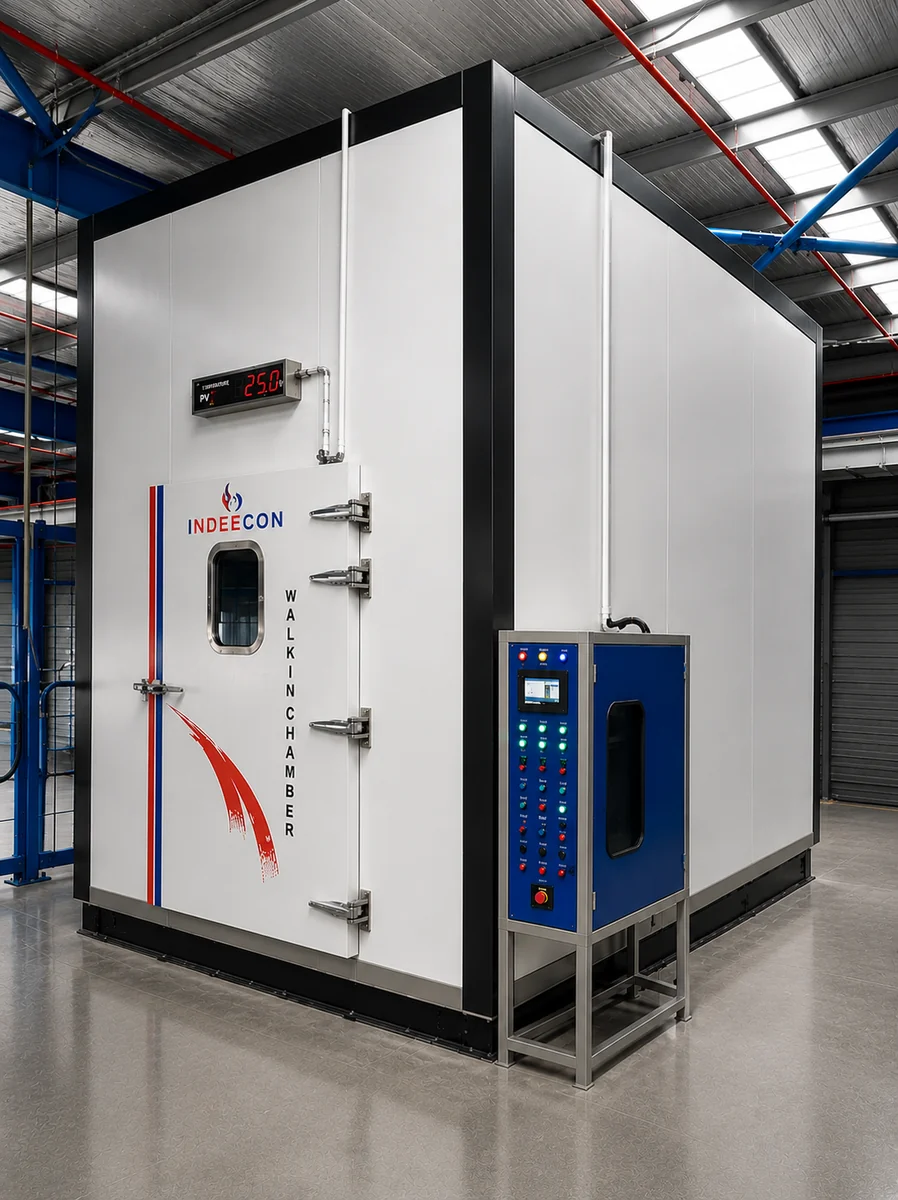
Walk-in Chamber
Modular walk-in chambers 2–100+ m³, ±1°C uniformity, 5°C/min fast ramp, 3,000 kg/m² floor loading. SAE J2030, MIL-STD-810. Drive-in for full vehicle and EV battery pack testing.

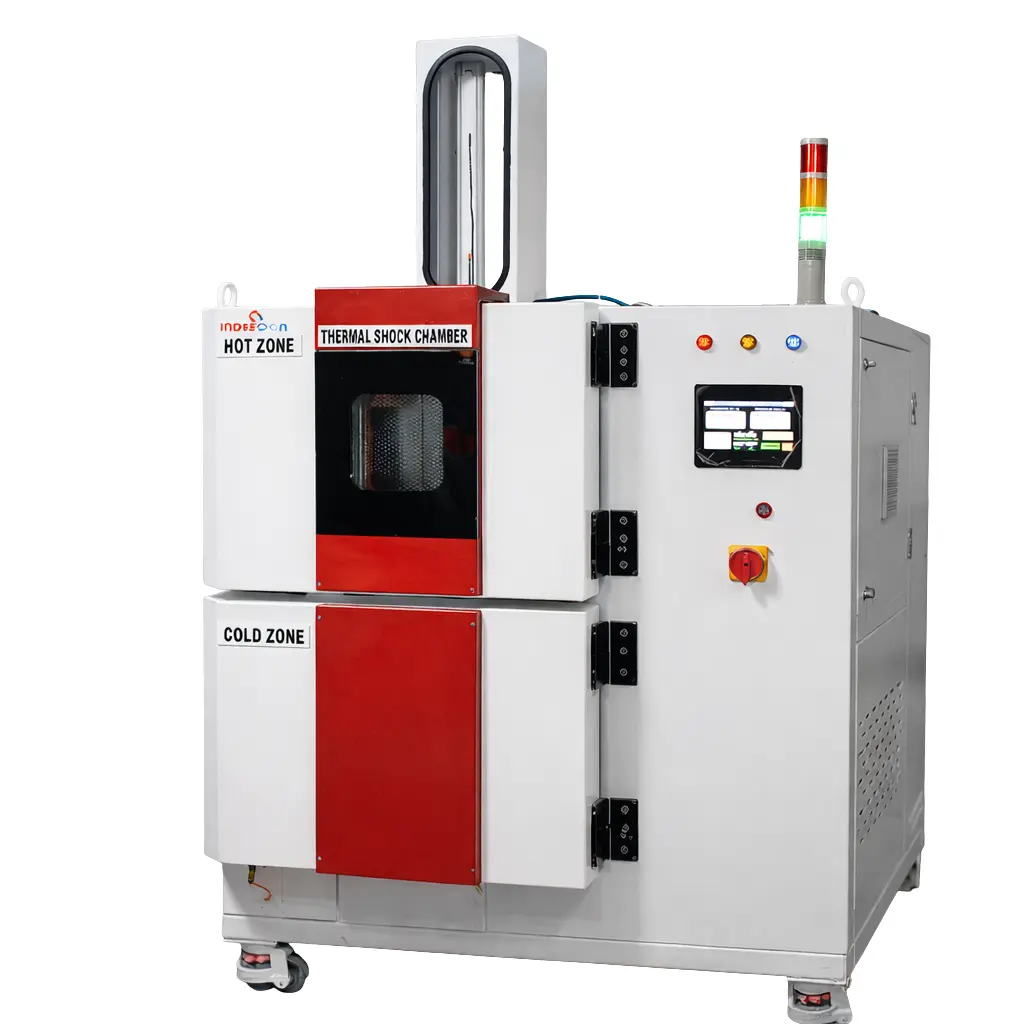
Indeecon's thermal shock chambers deliver ultra-rapid temperature transitions with sub-10 second transfer time for accelerated thermal shock testing and EV battery testing. Systems span 30L to 1000L+ with temperatures from -70°C to +200°C and recovery times as fast as 5 minutes. Built to MIL-STD-810H, IEC 60068-2-14, and AEC-Q100 automotive standards, with integrated fire suppression, H₂/CO gas sensors, and anti-condensation logic for safe lithium-ion battery testing.
Advanced PLC architecture delivering unmatched stability and real-time parameter tracking.
Industrial-grade materials engineered for 24/7 continuous operational stress.
Flexible interfaces for seamless integration with factory automation networks.
Multi-tiered fail-safes and interlocks ensuring personnel and facility protection.
Technical Data
Background
A thermal shock chamber rapidly cycles test specimens between extreme hot and cold zones, simulating temperature stress that products experience in real-world operations. Thermal shock testing is critical for detecting design weaknesses in solder joints, battery connections, seal materials, and structural integrity. Essential applications include:
Compliance
The thermal shock test method follows a repeatable cycle: specimens are loaded into a transfer basket, exposed to an extreme hot or cold setpoint, held for a defined dwell time to reach thermal equilibrium, then rapidly transferred to the opposite temperature zone — all within seconds, not minutes. This rapid transition is what distinguishes true thermal shock testing from standard ramped thermal cycling.
A typical thermal shock test method includes:
This method is defined under MIL-STD-810H (Method 503.6) and IEC 60068-2-14, and is the primary validation approach for EV battery testing, automotive electronics, and aerospace component qualification.
Capabilities
INDUSTRIES WE SERVE
EV Battery Testing
Module and pack-level thermal cycling for reliability validation in battery development and certification
Automotive Electronics
Connector, seal, and ECM durability under extreme temperature swings per AEC-Q100
Aerospace & Defense
High-reliability component qualification per MIL-STD-810H
Semiconductor & Microelectronics
Solder joint fatigue analysis and package integrity testing
Materials Research
Thermal expansion coefficient measurement, fatigue analysis, and material property studies
Quality Assurance
Production thermal shock validation for product certification and outgoing QC
Resources & Case Studies
Related Guides
These pages cover selection criteria, standards, and comparison frameworks relevant to this equipment family.
Still have questions? Our engineers are happy to help.
Related Products
Nearby models and adjacent systems often evaluated during specification and procurement.
Modular walk-in chambers 2–100+ m³, ±1°C uniformity, 5°C/min fast ramp, 3,000 kg/m² floor loading. SAE J2030, MIL-STD-810. Drive-in for full vehicle and EV battery pack testing.
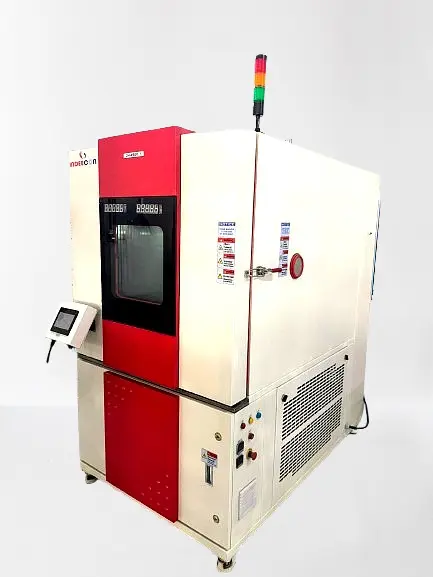
Temperature test chamber −70°C to +180°C without humidity. For electronics and automotive thermal cycling per IEC 60068-2-2. Forced-air design.
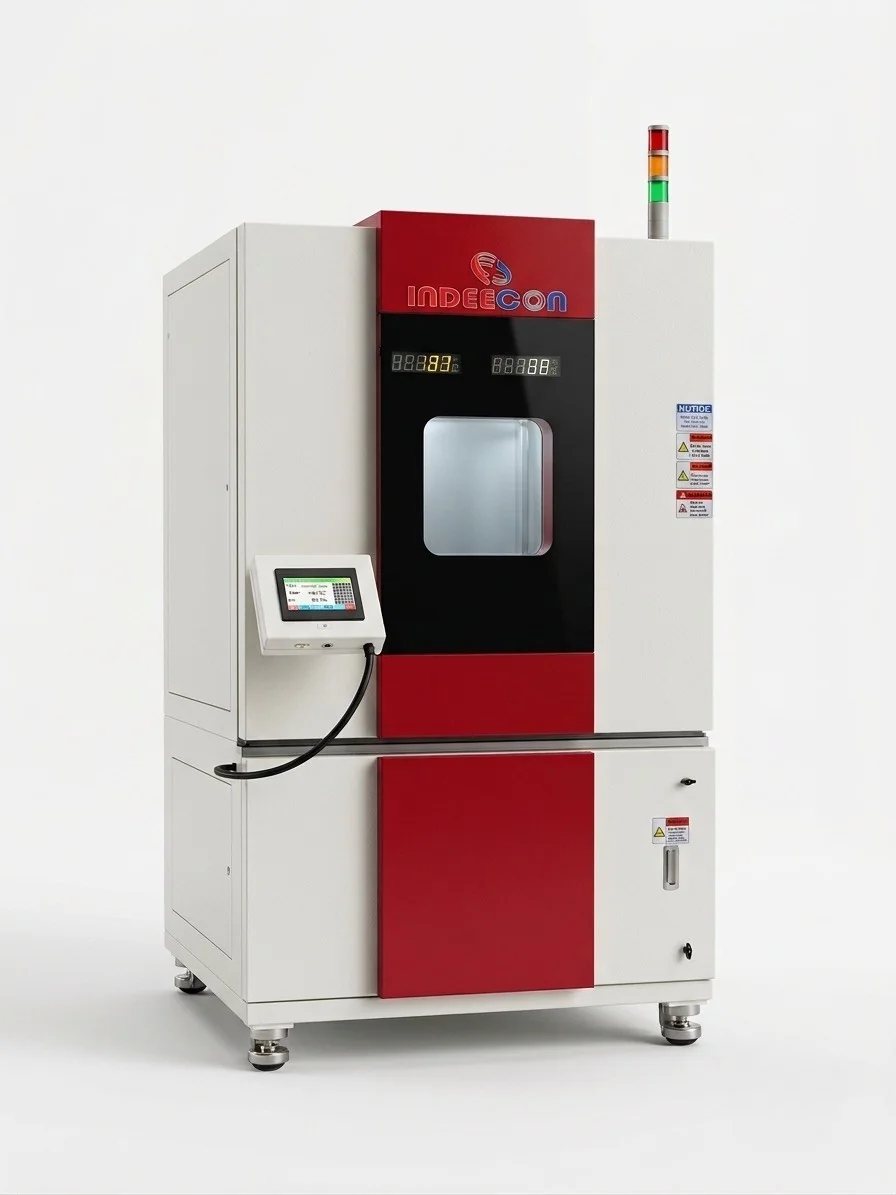
Temperature and humidity test chamber −70°C to +180°C, 20–95% RH. For electronics reliability and accelerated ageing per IEC 60068 standard.
Quick Inquiry
Fill out the form below and our team will get back to you within 24 hours.
Your inquiry has been received. Our team will contact you shortly.